
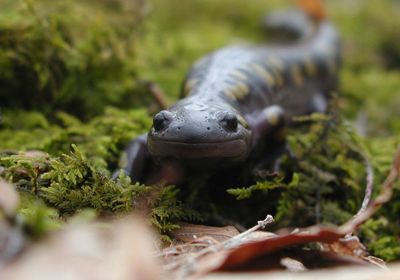




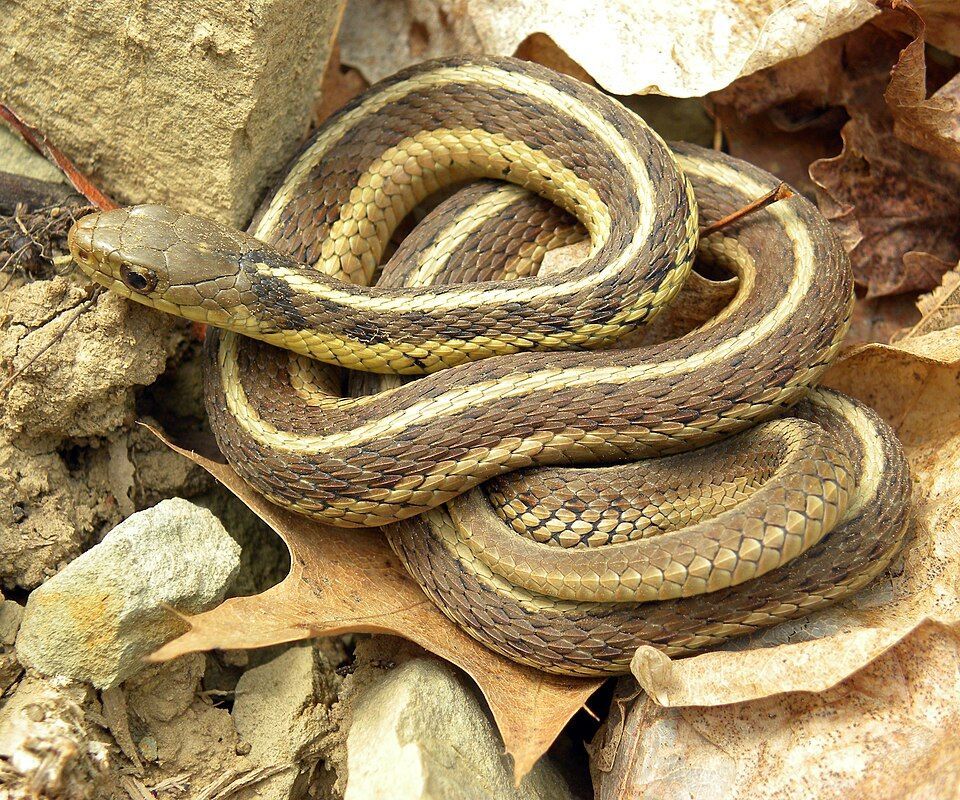
Happy #WildlifeWednesday! The recent warm sunny weather has made reptiles extra active and many snakes have been spotted sunning themselves on the trails! They need to catch some rays while they can, as the approaching weeks will lead to temperatures that are too cold for them. Have you ever seen a snake in the winter in Ohio, slithering through the snow? Probably not. So where do they go? Reptiles like this garter snake will enter a state of dormancy called “brumation.” Brumation is similar to hibernation in mammals, but with a few differences. Reptiles do not build up fat stores the way mammals do for hibernation. Instead they increase the amount of glycogen (sugar) in their system, which keeps their muscles in good condition so that they are ready to move when spring comes. Their brumation site should be close to water, as they will periodically get up during the winter to drink. While they do need to keep hydrated, their metabolic activity is greatly decreased causing them to move sluggishly, and they do not need to eat. In fact, if they consume too much before winter it can be dangerous because they cannot digest the food quickly in the cold and their stomach contents could rot. Some snakes brumate alone in their dens, while others such as the garter will engage in communal brumation, spending the winter in a hibernaculum with a large number of other snakes. Garter snakes are enormously social and will den together both for warmth and the pleasant company. Written by Michelle Leighty, TWC Environmental Education Specialist
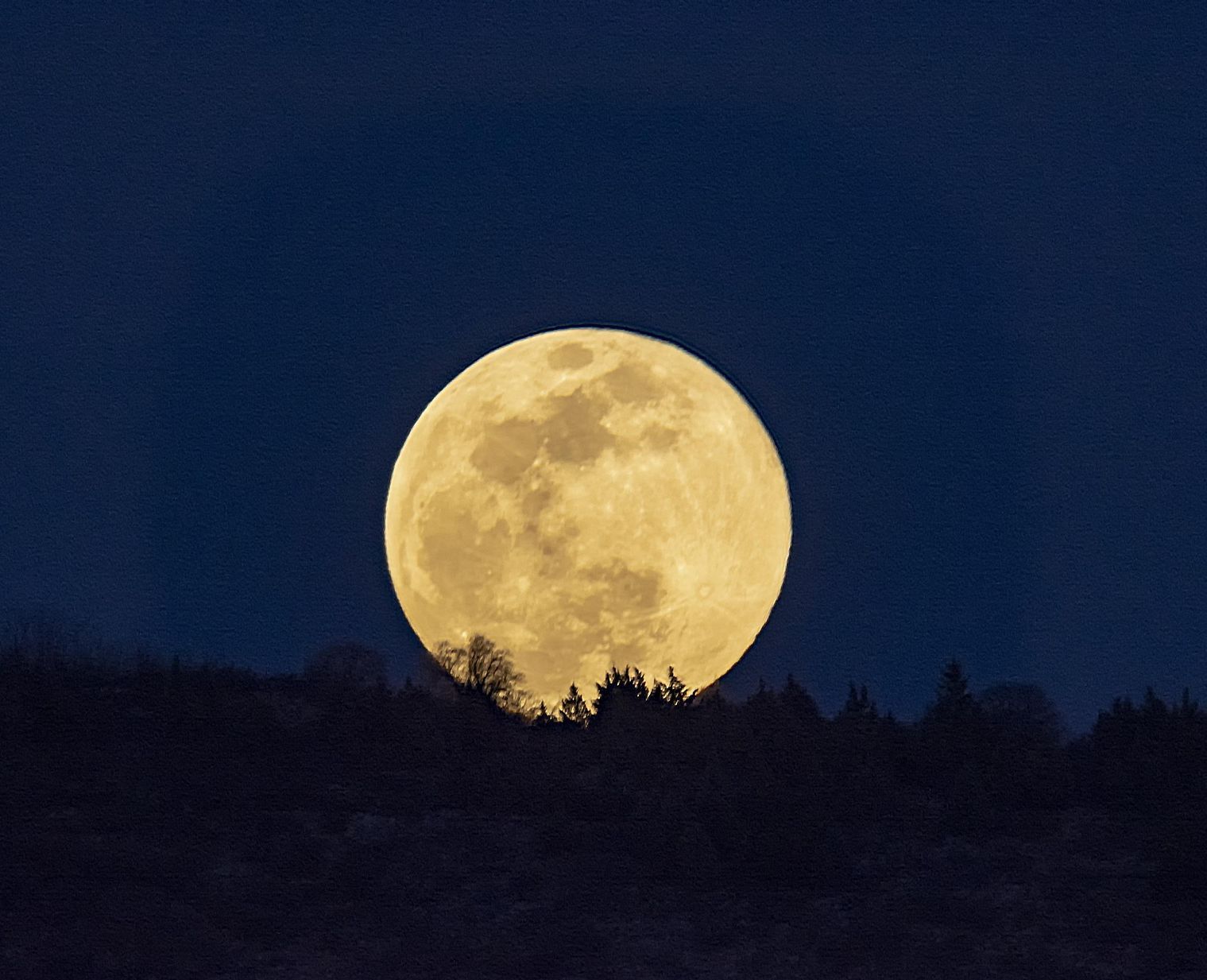
October’s full Hunter’s Moon occurs at exactly 12:11 AM EDT on Monday, October 26th, 2026. Even though the Moon reaches its peak illumination a bit after midnight, to our eye it will look full and bright when it rises at 5:56 PM EDT on Sunday, October 25th. In fact, it will also look full and bright on October 26th and October 27th. The reason for this is when a full moon occurs close to the autumnal equinox, its orbital path makes a shallow angle with the horizon. The full Moon names we’re familiar with have been used for generations. They originated from Native American, Colonial American, and other sources such as European names for the Moon. Many full Moon names are English interpretations of Native American full Moon names. Native Americans didn’t have calendars to keep track of time. Instead, they tracked time by observing the seasons and the lunar cycle. Being keen observers of their environment, their full Moon names described what was going on in nature around them. The Harvest and Hunter’s full Moons are unique in that they don’t follow tradition, instead of being tied to a specific month they’re tied to an astronomical event - the autumnal equinox. The Harvest Moon is the full Moon that occurs closest to the autumnal equinox date September 21st or 22nd and the Hunter’s Moon is the first full Moon after the Harvest Moon. Most years the Harvest Moon occurs in September; every three years it falls in October. If the Harvest Moon falls in October, the September Moon is called the Corn Moon and the November full Moon becomes the Hunter’s Moon. This was not one of those years. (It should be noted that this naming convention is not according to Native American tradition. In Native American tradition the September full Moon is the Corn Moon, the October full Moon is the Hunter’s Moon, and the November full Moon is the Beaver Moon.) Using the light of the full Hunter’s Moon, hunters could hunt late into the evening, allowing them more time to prepare for winter. Since full Moon names depended on the tribe and where they lived, a full Moon may have several names. So, although Hunter’s Moon is the most common name for October’s Moon there are others. Some of these include the Travel Moon, perhaps because birds and other animals were migrating or perhaps because northern Native American tribes would move down from the mountains for the winter. The Dakota peoples called it the Drying Rice Moon as this was the time to dry rice for storage, the Cree called this Moon the Migrating Moon, the Anishinaabe called it the Falling Leaves Moon, and the Ojibwe called it the Freezing Moon as temperatures become increasingly cold. The October 25th full Moon will rise as the Sun sets, and it will be easy to see as it will be a golden, orangish, or reddish color as it rises above the horizon. And it will appear large to our eye. On this night there is a bonus with the Hunter’s Moon, the planet Saturn is the bright object to the right and up from the Moon. Take a night hike and enjoy all nature has to offer under the full Hunter’s Moon. The days are getting shorter and the nights chilly – perfect for watching the full Hunter’s Moon rise. When the Moon is low in the sky the sunlight reaching it is travelling through more of the Earth’s atmosphere. The atmosphere scatters shorter wavelengths of light like blue and violet and lets longer wavelengths of light like red and orange pass through (this is called Rayleigh scattering). The longer wavelengths of light bend around the Earth and hit the Moon. The Moon in turn reflects this light back to our eyes. As the Moon rises it will return to its white-silvery color as we look through less atmosphere. The Moon appearing large on the horizon is called the Moon Illusion. When the Moon is low on the horizon our brains compare it to things like trees, buildings and other objects in the foreground, this tricks our brain into thinking the Moon is much farther away and physically larger. But it’s all an illusion, the Moon is always the same size whether it’s on the horizon or high overhead. If you don’t believe this, try this test – hold your thumb out at arm’s length place it over the Moon – your thumb will cover the Moon completely no matter where it is in the sky. Written by Robin Gill, Astronomy Education Specialist